When life takes your teeth away, use the artificial ones to smile again!
Tooth loss can occur for several reasons, old age being the most common of them all. Studies have shown that more than 50% of the people in the age bracket of 35-55 years have at least seven missing teeth. In the elderly, tooth loss can occur due to systemic diseases, dental problems, gum diseases, and bone loss. However, the most common reason for tooth loss in young adults and kids is dental decay or caries. No matter the reason, missing teeth can be embarrassing, especially the front ones. Missing teeth are aesthetically displeasing, compromise your smile, and can shatter your self-esteem.
Therefore, it is essential to consult your dentist for tooth replacement options to refurbish your smile and restore your confidence because a healthy smile is a gateway to a healthy life. Ideally, dentists worldwide consider dental implants as the best option for replacing missing teeth, but not everyone qualifies as a suitable candidate for dental implants. Nevertheless, we have many tooth replacement options that can fit in the mouth and budget of different people. Without further ado, let us delve into the possibilities you can consider while consulting with our dentist.
The Five Best Tooth Replacement Options
One or more missing teeth can lower your confidence, crush your personality, shush you away in social isolation, and compromise your looks and the ability to eat or speak. Even if you cannot get a dental implant, which is by far the best option to replace missing teeth, you still have plenty of tooth replacement options, fixed and removable, such as:
Fixed Prosthesis:
*Dental Implants
*Implant-Supported Dentures
*Dental Bridges (implant-supported)
Removable Prosthesis:
*Partial Dentures
*Complete Dentures
*Dental Bridges (tooth-supported)
Dental Implants:
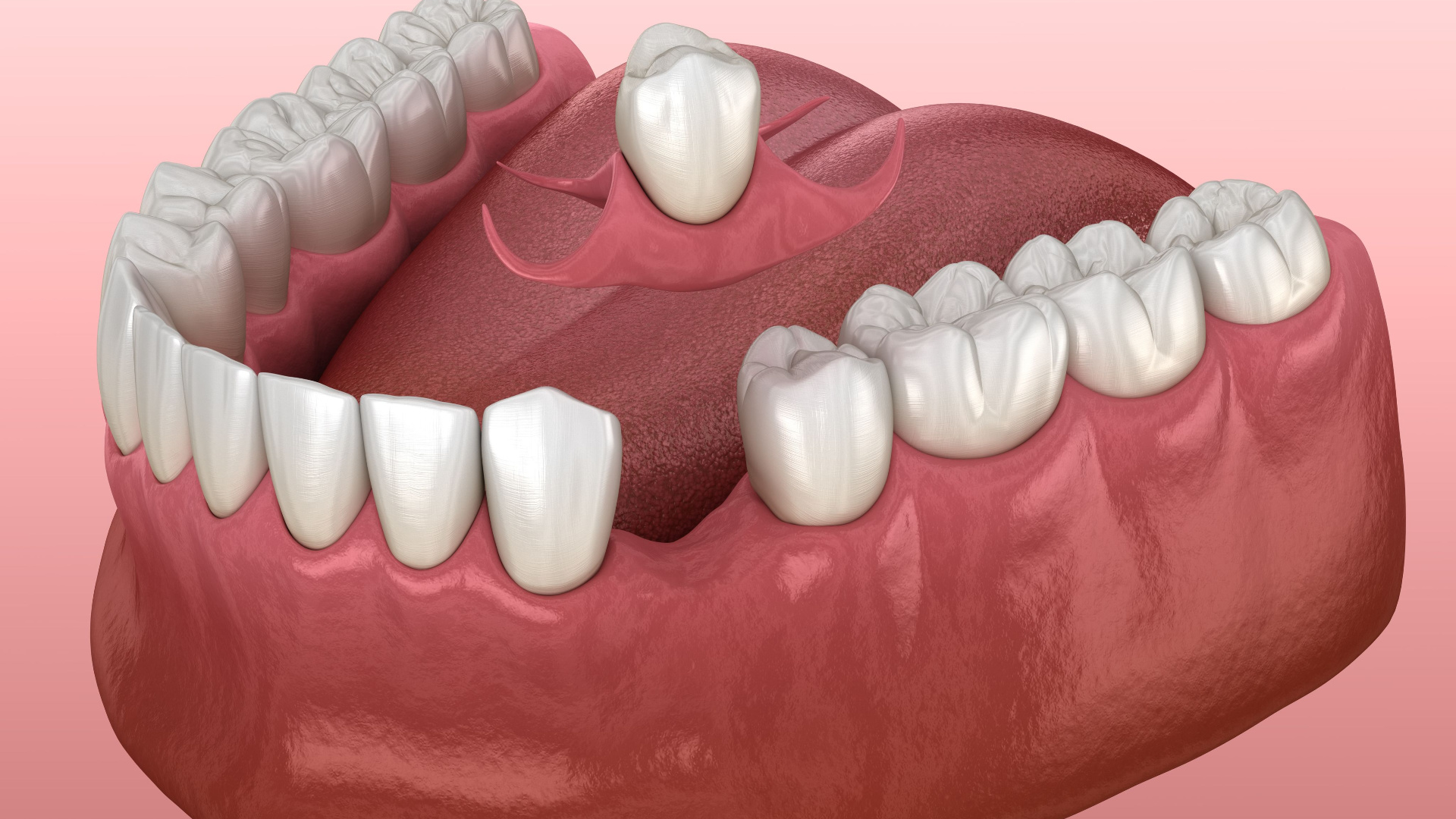
Dental implants are fixed dental prostheses that are surgically placed into your bone and consist of three parts:
*A titanium screw (embedded in the jawbone).
*An abutment (placed on the screw on which the crown will seat).
*A dental crown (the “tooth” part of the prosthesis)
Dental implants easily integrate with the jawbone, as they are biocompatible. With a 95% success rate, they improve the health of the bone as well. Moreover, dental implants mimic the natural tooth as no other prosthesis can. It restores the aesthetics, ability to speak and eat, and above all, nobody (including you) can tell it apart from the natural tooth. This is why it is considered the best tooth-replacement option. Before we move on, you must understand that dental implants are not a “one-for-all solution.” Indeed, no dental prosthesis is. Let us look at who can get a dental implant.
Who can get dental implants?
*People with excellent oral hygiene practice
*People with no health issues like diabetes or blood disorders
*People who have excellent jawbone
*People who do not have any gum diseases
*People who do not smoke
*People who commit to a lifetime of excellent oral hygiene and regular visits to the dentist
Therefore, if you think you are a good candidate for a dental implant, visit our dentist for further details. Nevertheless, unfortunately, if you do not qualify for it, worry not and keep reading! We can still create a mesmerizing smile for you.
Implant-Supported Dentures:
If you have entirely missing teeth in one or both arches but do not want to go for the old-school denture, we have got another option for you. Implant-supported dentures act as over-dentures or dentures supported by two or more dental implants at their base. They provide excellent support, possess the benefits of dental implants, and can last a lifetime if taken care of. The procedure, precautions, and requirements are the same as dental implants.
Dental Bridges:
Dental bridges are somewhat easy and affordable fixed tooth replacement options that are popular amongst patients. The dentist might present you with two types of dental bridges:implant-supported and tooth-supported.
Implant-Supported Bridge
This is a blend of dental implant and dental bridge. Implants are embedded in the bone, and instead of receiving individual crowns, they receive multiple fused crowns to cover multiple missing teeth. However, as mentioned before, you would have to qualify as a suitable candidate to receive any of the implant-related tooth replacement options.
Tooth-Supported Bridge
This traditional dental bridge is less expensive and invasive than the implant options. It can cover one or more missing teeth by taking support from the neighboring natural teeth on which the bridge will be cemented.
A dental bridge is easy to maintain (regular brushing and flossing) and cost-effective as well. The only condition with dental bridges is that it is essential to have a natural tooth or a solid abutment like an implant both in front (anterior) and at the back (posterior) of the missing tooth or teeth.
Removable Partial and Complete Dentures:
People who suffer from dental problems and other health diseases, especially the elderly, are a good fit for removable prostheses. Moreover, removable dentures are a good tooth replacement option for people who suffer from bone loss or cannot afford other dental options. Partial dentures replace one or more but not all missing teeth, while a complete denture replaces all the missing teeth in one or both arches and seats over the jawbone. They are easy to maintain, less invasive, and require no surgical intervention. However, unless the patient gets used to the removable dentures, they can be uncomfortable initially and difficult to clean.
What Happens if You Don’t Replace an Extracted Tooth?
Most people, especially in old age, do not find it necessary to replace their teeth. What they do not understand is that leaving the missing teeth as is can lead to a plethora of oral health problems, such as:
*Compromised facial aesthetics
*A displeasing and unhealthy smile
*Malaligned teeth (as they cover the space caused by the missing teeth)
*Difficulty in speech
*Deteriorating overall health due to difficulty in eating
*Bone loss
*Dental problems
How Much Does it Cost to Replace One Tooth?
The best way to learn the cost of your tooth replacement will be to schedule a consultation with our dentist. Many things factor into the price, such as how many teeth need to be replaced, the location of the tooth, the health of your jawbone, and your choice of prosthesis. No matter the cost, replacing a missing or extracted tooth is vital. Your overall health and lifestyle are directly proportional to your oral health. Missing teeth can cause many problems for you that you would not want. Therefore, listen to what your smile needs and your dentist says! Now that you are well aware of your tooth replacement options, you can be on the same page with your dentist when you discuss all your options and decide the best one for you.